Rust solo survival next to Oil Rig works when one player turns a frozen coastline into a defended fortress
You can order the same kind of articles for your own video to boost it on YouTube and Google. Just message the Telegram bot @sat_sit_bot. It writes articles around your video, embeds the video and publishes them on popular niche websites (no ads). Your first 50 articles are free.
· based on the channel Blooprint
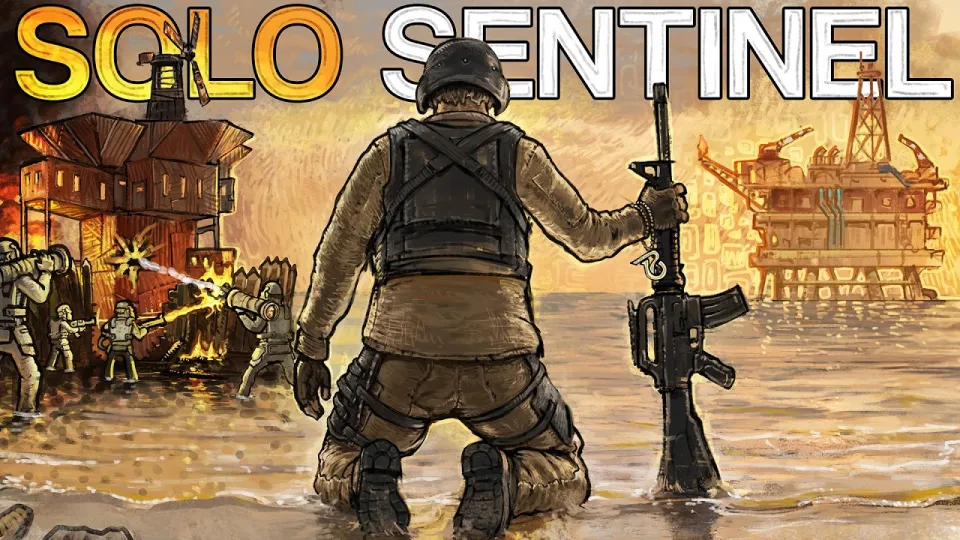
Rust solo survival works best when you pick a base location that other players cannot ignore but also cannot easily reach. In this run, Blooprint builds a solo base directly next to Oil Rig on a fresh wipe, snowballs from primitive gear into a defended compound, and holds that ground against a late-night rocket raid. The full stream where this playstyle is tested live is on Blooprint's Twitch channel.
Why a solo base next to Oil Rig is a real strategy
Oil Rig is one of the highest-value monuments in Rust, and living beside it converts travel time into loot time. A solo player who spawns near the coast can hit the monument, extract crates, and be back behind their own walls before a group even finishes loading a boat. The trade-off is visibility: everyone who runs Oil Rig sees your base, and everyone who sees your base knows there is no second player inside to watch the door.
That trade-off is exactly what makes the location interesting. Instead of hiding in a forest tile, the base becomes a toll booth on a route other players already want to use. The solo player leans on three things to make it work:
- A compact footprint that is cheap to wall in but tall enough for vertical peeks.
- Turrets covering the water approach, because most traffic arrives by boat.
- A short walk to the monument so a failed run costs little time.
The early snowball on a fresh wipe
The run starts from nothing and pushes toward a full kit in the first hours of the wipe. The pattern is familiar to anyone who plays solo: farm enough for a starter base, take a low-risk monument, then convert the first decent weapon into a bigger play. What changes with Oil Rig next door is the ceiling. A single successful monument run can hand a solo player military-grade loot that would normally take a group several days of grinding to match.
Blooprint's approach keeps the base small early and expands it as materials arrive. Walls go up before decorations, turrets go up before storage, and the compound grows outward from the core rather than being planned all at once. That order matters on a wipe-day server where the first hours decide who gets to keep their footprint.
Defending a solo base without a teammate
Base defense for a solo player is a design problem more than a skill problem. With no one to hold a flank, every angle has to be covered by something that does not sleep. In this run the answer is layered turrets, a compound that forces raiders into open ground, and a core that stays reachable from inside the base only.
The raid itself arrives late at night, and the footage includes the raider who fired the rockets, which underlines how small the server feels when your base sits on a monument route. A solo defense follows a few hard rules:
- Keep turrets loaded and spread across different heights so one rocket cannot silence the whole perimeter.
- Store the best loot in the deepest room, never in the room closest to the shooting side.
- Keep an escape hatch or a second exit so a breach does not end with you trapped in the core.
- Repair during lulls, not during the push, because a solo cannot repair and fight at the same time.
What viewers actually want from solo Rust content
The reaction to this video is a useful signal about the format. A large share of the audience says the solo perspective is more engaging than group play, because the creator narrates every decision to the viewer instead of talking to teammates. In a group video, comms replace explanation; in a solo video, the player has to say out loud why a wall goes here, why a fight is skipped, and why a monument is worth the risk.
That is also why the struggles land. A solo wipe is full of setbacks that a group video edits out: lost kits, wasted farm, raids that arrive at the worst moment. Viewers who play alone recognize those moments, and they respond to them more than to a twenty-minute sprint to endgame gear. The comments on this upload ask for more solo runs, more cave bases, and more improvised alliances with random players met along the way.
Common questions about solo base building near monuments
Players who try this layout usually run into the same issues, and the answers are mostly about discipline rather than mechanics.
- Noise discipline. Every gunshot near Oil Rig tells the monument crowd where you live. Use melee tools for farming near the base and save loud weapons for the monument itself.
- Boat traffic. Expect visitors at odd hours. A turret aimed at the shoreline is worth more than a second layer of stone on the inland side.
- Raid timing. Groups raid when their own wipe is quiet, which often means the middle of the night. Sleeping in a defended core with turrets active is the only realistic protection.
- Loot discipline. Do not stockpile everything in one room. Spread value so a single breach does not end the wipe.
All links from the video
- Twitch live streams: https://www.twitch.tv/blooprint
- Kick channel: https://kick.com/blooprint
- TikTok clips: https://www.tiktok.com/@blooprintgames
- Twitter updates: https://twitter.com/blooprintgames
- Discord community: https://discord.gg/blooprint
What this solo Oil Rig run proves about Rust
A solo player can hold ground on a high-traffic monument if the base is built for defense from the first hour. Blooprint's run shows the full arc: a fresh-wipe snowball, a compound that grows around turrets instead of decorations, and a raid that arrives late at night from a player who ends up in the video. The base eventually falls in a close fight, but the design keeps working for other players, several of whom report copying it on their own servers. For more runs in this format, watch Blooprint live on Twitch, where the solo perspective and the play-by-play reasoning stay front and center.
Key takeaways
- Blooprint's solo run is built on a base placed directly next to Oil Rig, giving fast access to the monument's loot and crate spawns.
- The video follows a fresh-wipe snowball on a solo account, from primitive gear to a defended multi-turret base.
- Defense relies on turrets, compound walls and vertical control rather than on teammates, since a solo has no one to cover a flank.
- A viewer who sent rockets at the base during a late-night raid appears in the footage, showing how exposed an Oil Rig base is.
- The run ends in a close loss after a sustained raid, with the base design still drawing praise from players who copied it.
Questions & answers
Is it worth building a solo base right next to Oil Rig in Rust?
Yes, if you accept the exposure. Oil Rig delivers high-tier loot and crate spawns within a short walk, which lets a solo player skip hours of farming. The cost is that every group running the monument sees your base, so you need turrets and a compact core before you start storing anything valuable.
How does a solo player defend a base against a rocket raid?
Layer turrets at different heights so one rocket cannot disable the whole perimeter, keep the best loot in the deepest room, and maintain a second exit. Repair during lulls rather than mid-push, since a solo cannot repair and shoot at the same time. Expect raids at night, when groups have nothing else to do.
Why do viewers prefer solo Rust videos over group content?
In solo videos the creator explains every decision directly to the audience, while group videos fill that space with team comms. That makes base design, fight selection and risk assessment easier to follow, and the setbacks feel more relatable to players who wipe alone.
What should a solo player do first on a fresh wipe near a monument?
Secure a small starter base with a door and a sleeping bag, then farm enough for walls and a first turret before pushing the monument. Expand the compound outward as materials come in, and never store military loot in the room facing the water approach.
Source: The Solo Sentinel - Rust · Markdown version